How Musicians and Alternative Style Keep the Trend Alive
Tie-dye has never been just a fashion trend.
Long before it appeared on celebrity red carpets, luxury collections and mainstream streetwear, tie-dye was closely connected with music, youth culture, creativity and DIY fashion. It appeared at concerts, festivals, record stores, independent music scenes and creative communities, where musicians and fans used clothing as a way to express their identity.
Today, tie-dye continues to move between mainstream fashion and alternative style. Musicians wear it on stage, artists incorporate it into merchandise, indie performers pair it with vintage clothing, and fashion enthusiasts continue to embrace the DIY character that made tie-dye so distinctive.
The result is a style that sits somewhere between music culture, vintage fashion, streetwear and personal expression.
Why Tie-Dye Has Always Been Connected to Music
Few patterns have such a strong relationship with music culture as tie-dye.
Its connection with music became particularly visible during the counterculture and psychedelic music movements of the 1960s. Musicians, artists and concertgoers embraced colorful clothing as part of a broader interest in creativity and individual expression.
Tie-dye became associated with psychedelic artwork, experimental music, festivals and handmade fashion.
That DIY attitude remains one of the biggest reasons musicians and fashion enthusiasts continue to embrace the style.
A tie-dyed shirt doesn’t have to look perfectly manufactured.
In fact, the irregular colors, unpredictable patterns and handmade appearance are often what make the garment interesting.
From Psychedelic Rock to Modern Alternative Fashion
The relationship between tie-dye and music didn’t disappear after the original psychedelic era.
Instead, the aesthetic continued to appear in different generations of music and fashion.
Rock musicians incorporated colorful and distressed clothing into their wardrobes. Punk and alternative communities embraced customization and DIY techniques. Hip-hop later transformed oversized casual clothing into an influential part of contemporary streetwear.
Each generation interpreted the aesthetic differently.
This has allowed tie-dye to become more than a single fashion trend. It has become a visual language that different music communities can reinterpret.
Musicians and the Rise of DIY Fashion
One of the most interesting aspects of musician fashion is that it often develops outside traditional fashion systems.
Musicians don’t necessarily dress according to seasonal collections. Their wardrobes can be influenced by:
- Tour culture
- Vintage shopping
- Band merchandise
- Independent designers
- Thrift stores
- Skate culture
- Music festivals
- DIY customization
- Album artwork
- Music videos
Tie-dye fits naturally into this environment because it can be customized.
A plain T-shirt can become a distinctive garment through dye, bleaching, painting or other treatments.
For independent musicians, this also creates an opportunity to develop merchandise that feels more personal than a standard printed T-shirt.
Tie-Dye as Music Merchandise
Music merchandise has changed dramatically.
A band T-shirt is no longer necessarily just a black shirt with a logo printed on the front. Independent artists and music labels increasingly treat merchandise as part of their overall visual identity.
Tie-dye provides an obvious opportunity.
A limited-run tie-dye shirt can feel closer to a collectible fashion piece than ordinary merchandise. Because the pattern can vary from one garment to another, every piece may feel slightly different.
For musicians, this can turn clothing into another form of creative expression.
The formula becomes:
Music + artwork + clothing + DIY production = a complete visual identity.
The Alternative Fashion Connection
Alternative fashion has always challenged the idea that everyone needs to dress according to the same mainstream trends.
Instead, alternative style often develops through communities.
Someone discovers a vintage silhouette. Another person experiments with customized denim. A musician starts wearing hand-dyed T-shirts. Fans adapt the look. A designer takes inspiration from it. Eventually, the aesthetic reaches a much wider audience.
Tie-dye works particularly well within this process because there is no single correct way to create or wear it.
You can choose bright psychedelic colors.
You can create muted earth tones.
You can bleach black garments.
You can dye vintage denim.
You can combine unexpected colors.
You can intentionally create an imperfect finish.
That freedom is one of the reasons tie-dye remains popular among people interested in alternative and independent fashion.
Musicians and Personal Style
For many musicians, clothing is an extension of their artistic identity.
An artist’s visual image can become almost as recognizable as their sound.
Consider the relationship between:
Music → album artwork → clothing → stage design → music videos → fan fashion.
When these elements share a visual language, an artist becomes recognizable beyond their music.
Tie-dye can contribute to this identity because its colors and patterns are immediately noticeable.
A musician wearing a heavily customized tie-dye jacket on stage creates a very different visual impression from an artist wearing a minimalist black suit.
Neither approach needs to be better than the other. They simply communicate different creative identities.
Rap, Hip-Hop and the Evolution of Tie-Dye Streetwear
Hip-hop has played an enormous role in transforming casual clothing into influential fashion.
Oversized silhouettes, graphic T-shirts, hoodies, sneakers and statement accessories have become central elements of modern streetwear.
Tie-dye fits naturally into this environment.
Instead of the traditional fitted tie-dye T-shirt, contemporary streetwear can use:
- Oversized hoodies
- Baggy sweatshirts
- Relaxed trousers
- Wide-leg jeans
- Matching sets
- Graphic sneakers
- Baseball caps
- Crossbody bags
This gives tie-dye a more modern streetwear identity rather than making it look exclusively like festival clothing.
Travis Scott and Contemporary Music Fashion
Modern musicians have increasingly blurred the boundaries between music and fashion.
Artists such as Travis Scott demonstrate how musicians can develop entire visual worlds around albums, merchandise, collaborations and streetwear.
Today’s music merchandise can include limited collections, unusual graphics, vintage-inspired washes, oversized silhouettes and experimental treatments.
Tie-dye fits naturally into this environment because it can give basic garments a faded, handmade or collectible appearance.
The relationship between music and fashion is therefore no longer simply about musicians wearing interesting clothes. Clothing itself can become part of an artist’s brand and creative universe.
Indie Music and Vintage Fashion
Indie music culture has also maintained a strong relationship with vintage fashion.
Independent musicians and fans often combine thrifted clothing with contemporary pieces, creating outfits that feel personal rather than heavily coordinated.
A faded tie-dye T-shirt can work particularly well with:
- Vintage denim
- Leather jackets
- Second-hand coats
- Canvas sneakers
- Boots
- Silver jewelry
- Old band shirts
- Handmade accessories
The appeal isn’t necessarily about looking perfectly styled.
Instead, it is about creating an outfit that feels discovered, personal and individual.
Festival Fashion and Tie-Dye
Music festivals helped introduce alternative fashion aesthetics to much larger audiences.
Festivals created spaces where people could experiment with clothing in ways they might not normally try.
Tie-dye became a natural choice.
Bright colors work well in photographs, the aesthetic has a strong connection to music history, and tie-dye garments are relatively easy to style.
However, contemporary festival fashion has moved beyond the traditional psychedelic look.
Modern festival-inspired tie-dye can be:
- Minimalist
- Monochromatic
- Oversized
- Vintage-inspired
- Sporty
- Glamorous
- DIY
This flexibility explains why the trend continues to appear across different generations of music culture.
The DIY Philosophy Behind Tie-Dye Fashion
Perhaps the most important part of tie-dye isn’t the color.
It is the philosophy behind it.
DIY fashion suggests that you don’t need a major fashion house to decide what you should wear.
You can modify an old shirt.
You can buy something from a thrift store.
You can customize your own merchandise.
You can experiment with colors.
You can make mistakes.
And sometimes those mistakes become the best part of the garment.
This attitude connects tie-dye with punk, indie, skate and alternative fashion communities that have historically valued individuality and customization.
Why Imperfect Clothing Works
Mainstream fashion often emphasizes precision and polished finishes.
Alternative fashion can take a different approach.
A perfectly symmetrical tie-dye pattern may look commercial.
An uneven pattern with unexpected color combinations can look handmade.
That distinction gives tie-dye much of its character.
The slightly faded color.
The uneven dye.
The oversized shape.
The vintage graphic.
The repaired seam.
Together, these details can create a garment that feels more personal.
Tie-Dye Meets Thrift Fashion
Thrifting has become increasingly important in contemporary fashion, particularly for people searching for distinctive clothing.
Tie-dye works especially well with thrift fashion because existing garments can be transformed rather than discarded.
A plain vintage sweatshirt can be dyed.
A faded T-shirt can be customized.
An old jacket can receive a colorful treatment.
A pair of jeans can become part of a completely different outfit.
This creates a fashion philosophy based around reuse, customization and individuality.
Instead of asking, “What is everyone wearing?”
The question becomes:
“What can I turn this into?”
Musicians as Fashion Influencers
Musicians have always influenced fashion because audiences don’t simply listen to their music.
They follow the visual world surrounding the artist.
Hair, jackets, shoes, sunglasses, jewelry and T-shirts can all become recognizable parts of a musician’s identity.
Music videos amplify this effect.
A particular outfit can become associated with an album or musical era.
Concert photography can transform a personal clothing choice into an iconic image.
Social media has accelerated the process even further.
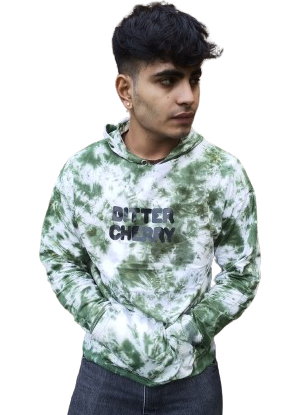
Today, an artist can wear a customized tie-dye hoodie in a studio photograph or music video, and fans can immediately search for similar styles.
The New Generation of Tie-Dye
The newest interpretation of tie-dye is less about recreating the classic psychedelic T-shirt and more about combining different fashion influences.
Think:
90s streetwear + vintage music culture + DIY fashion + oversized silhouettes + contemporary styling.
This combination gives tie-dye a fresh identity.
Instead of wearing an entirely colorful outfit, someone might pair a faded tie-dye shirt with black trousers.
Another person might wear a muted tie-dye hoodie with vintage denim.
Someone else might use a hand-dyed jacket as the centerpiece of an otherwise monochrome outfit.
The possibilities are almost unlimited.
How to Create an Alternative Tie-Dye Look
If you want the aesthetic without looking like you’re wearing a traditional festival costume, start with the silhouette.
Choose an oversized vintage T-shirt or sweatshirt and build the rest of the outfit around it.
Look 1: Indie Music Style
Oversized tie-dye T-shirt + vintage jeans + worn sneakers + silver jewelry.
Look 2: Alternative Streetwear
Tie-dye hoodie + baggy black trousers + sneakers + baseball cap.
Look 3: Rock-Inspired Fashion
Faded tie-dye shirt + leather jacket + distressed denim + boots.
Look 4: DIY Artist Style
Hand-dyed sweatshirt + vintage cargo trousers + canvas sneakers + handmade accessories.
The goal isn’t to make everything colorful.
The goal is to make one piece feel personal.
Tie-Dye, Music and Personal Expression
What makes tie-dye particularly interesting in music-inspired fashion is that it represents more than color.
It represents experimentation.
It represents customization.
It represents nostalgia.
It represents music history.
And, perhaps most importantly, it represents the idea that fashion doesn’t have to be perfect.
From psychedelic rock and festival culture to hip-hop, indie music, streetwear and independent artists, tie-dye has repeatedly found a place wherever musicians and audiences want to create their own visual identity.
Why Tie-Dye Keeps Coming Back
Fashion trends often disappear and return years later.
Tie-dye is different because it can continually reinvent itself.
Its basic technique remains recognizable, but the styling changes with every generation.
The 1960s brought psychedelic color.
The 1990s brought casual streetwear.
The 2000s and 2010s brought festival fashion.
Today, tie-dye exists alongside oversized streetwear, vintage fashion, independent merchandise, thrift culture and contemporary musician style.
That ability to evolve is one of the reasons it remains relevant.
Final Thoughts
Tie-dye’s relationship with music is a major part of its fashion history.
Musicians, artists and fans helped transform it from a simple DIY dyeing technique into a recognizable symbol of creativity, individuality and youth culture.
Today, the aesthetic continues to move between alternative fashion and mainstream style, appearing on stages, in music videos, at festivals, in independent merchandise collections and throughout contemporary streetwear.
The future of tie-dye may not look exactly like its psychedelic past.
It could be darker.
More minimal.
More oversized.
More experimental.
Or completely DIY.
And that’s exactly what makes the trend interesting.
Tie-dye doesn’t belong to just one generation, genre or fashion scene. It belongs to anyone who wants to make their style their own.

What's on your mind?