
Garment Dyeing & Surface Effects
Fashion rarely begins with a blank canvas. A garment may be cut from denim, cotton, linen, canvas or jersey, but its final character is often created much later—inside the dye house, where colour, chemicals, abrasion, heat and time transform an ordinary textile into something worn-in, irregular, tactile and distinctly individual.
A wash can make a new pair of jeans look decades old. It can turn a flat black fabric into a cloudy charcoal, create frost-like highlights across denim, produce mineral-looking surfaces or give a T-shirt the irregular colour of a hand-painted artwork.
For designers, merchandisers and fashion editors, understanding washes is therefore about more than knowing their names. Each technique produces a different visual language, hand feel, degree of uniformity and relationship with the garment’s construction.
Below is a detailed guide to some of the most important dyeing and washing techniques used across contemporary fashion.
1. Acid Wash: The Iconic Stone-Washed Look
Acid wash is one of the most recognisable garment treatments in fashion. Its dramatic, high-contrast appearance became particularly associated with denim in the 1980s and has repeatedly returned to fashion through subsequent decades.
Despite its name, modern “acid wash” does not necessarily mean that strong acid is simply poured onto a garment. Historically, the effect was associated with pumice stones treated with bleaching agents, which were then used to create irregular areas of colour loss.
The process
The garment—particularly denim—is placed in an industrial washing machine along with abrasive stones. A bleaching or oxidising treatment creates areas of colour removal while the stones physically abrade the fabric.
The result is a surface where darker and lighter areas exist almost randomly. Seams, folds, pockets and raised portions of the garment often respond differently, giving the piece its characteristic depth.
The exact formulation and process depend on the fabric, desired shade and production facility. Contemporary factories increasingly use alternative techniques that can reproduce the visual effect with reduced chemical and water consumption.
What it looks like
Acid-washed garments typically feature:
- High contrast between light and dark areas
- Cloudy or mottled colour
- Strongly highlighted seams and folds
- A distinctly vintage appearance
- A softer, worn-in surface
Why designers use it
Acid wash is useful when the intention is to make denim feel rebellious, nostalgic and deliberately imperfect.
It works especially well for:
- Denim jackets
- Jeans
- Overshirts
- Cargo trousers
- Vintage-inspired T-shirts
- Grunge collections
Its greatest strength is its unpredictability. Two garments from the same batch can possess subtly different patterns, which contributes to the individuality of the finished product.
2. Marble Wash: Creating a Clouded Surface
Marble washing is related visually to acid washing but is often designed to produce a softer, more fluid, stone-like pattern.
The name comes from the resemblance to the veins and tonal variations found in marble.
The process
The garment is subjected to a combination of abrasion and colour reduction. Stones, mechanical action, bleaching agents or specialised washing formulations can be used to create irregular areas of light and dark.
Unlike a completely flat dye, the treatment interacts with the physical shape of the garment. Folded areas, seams and edges can therefore become lighter or darker.
The aesthetic
A successful marble wash creates:
dark base → transitional grey → pale highlights → irregular tonal movement
The boundaries should feel organic rather than graphic.
Fashion relevance
Marble wash is particularly effective when a designer wants a garment to appear weathered without looking uniformly faded.
It has found applications in denim, cotton jersey, fleece and casualwear.
It is also useful for contemporary collections where designers want a garment to look almost geological—more like a natural stone surface than a conventionally dyed textile.
3. Snow Wash: Frost on Fabric
Snow wash is another denim treatment that produces a frosted, heavily contrasted appearance.
The technique is particularly associated with garments where the surface appears to have been dusted or splashed with pale colour.
The process
A traditional approach involves abrasive stones or similar materials that have been treated with a bleaching agent. During washing, the treated material makes irregular contact with the garment.
Because contact is uneven, some areas lose significantly more colour than others.
The garment can therefore emerge with:
- White or very pale highlights
- Dark blue or black areas
- Sharp tonal contrast
- A frosted appearance
Why “snow”?
The name refers to the pale, scattered areas that resemble snow sitting on a darker surface.
Design relevance
Snow wash is particularly powerful on:
- Dark indigo denim
- Black denim
- Denim jackets
- Oversized jeans
- Streetwear silhouettes
It produces a stronger visual statement than a conventional stone wash and can give even a simple silhouette considerable surface interest.
4. Stone Wash: The Foundation of Modern Denim
If acid wash is dramatic, stone wash is its more naturally weathered relative.
Stone washing is one of the most influential processes in denim history because it helped transform rigid, dark, newly manufactured denim into the soft, faded jeans consumers associated with lived-in clothing.
The process
Denim garments are washed with abrasive stones, traditionally pumice stones. The physical contact between the stones and fabric gradually removes some surface dye.
At the same time, the washing process softens the garment.
The amount of abrasion can be controlled through:
- Stone size
- Stone-to-garment ratio
- Washing time
- Mechanical action
- Water temperature
- Chemical auxiliaries
The result
Stone washing produces:
- Softer denim
- Reduced colour intensity
- Faded high points
- More pronounced seam definition
- A naturally worn appearance
Its importance
Stone wash is not simply decorative. It changed the way consumers understood denim.
Instead of treating jeans as a rigid industrial fabric, stone washing helped establish the idea that wear itself could be beautiful.
5. Enzyme Wash: Softness Without Heavy Abrasion
Enzyme washing represents a more controlled approach to creating softness and surface variation.
Instead of relying primarily on physical stones, manufacturers use enzymes that act on particular components of the textile surface.
The process
Cellulase enzymes are commonly used with cotton-based fabrics. They act on exposed cellulose fibres, helping remove loose surface fibres and creating a cleaner, softer appearance.
The process can produce a degree of fading while simultaneously improving hand feel.
The result
Enzyme washing can create:
- Softer fabric
- Cleaner surface
- Reduced fuzziness
- Subtle fading
- A smoother hand
Why it matters
Enzyme washing is especially relevant when a designer wants comfort and refinement rather than aggressive vintage distressing.
It can also reduce dependence on heavy mechanical abrasion in certain applications.
6. Bleach Wash: Controlled Colour Removal
Bleach washing is fundamentally different from adding colour.
Instead, the process removes existing colour from the textile.
The process
A bleaching or oxidising treatment is applied to the garment under controlled conditions. The treatment breaks down colour molecules, reducing the original depth of shade.
The intensity can vary from subtle fading to dramatic colour removal.
The visual spectrum
A dark indigo can become:
indigo → mid-blue → pale blue → almost white
Black can similarly move toward:
black → charcoal → grey → pale grey
Design relevance
Bleach washing is valuable because it allows designers to create a controlled sense of age.
It is especially important in:
- Denim
- Grunge fashion
- Vintage collections
- Streetwear
- Utility clothing
The challenge is controlling the process so that the garment looks intentionally aged rather than chemically damaged.
7. Dip Dye: Colour That Travels Through the Garment
Dip dyeing creates a distinctly different effect from all-over dyeing.
Rather than exposing the entire garment to an identical colour environment, only part of the garment is immersed in the dye.
The process
A garment is gradually lowered into a dye bath, sometimes repeatedly.
The depth of immersion determines where colour appears.
The garment can be:
- Dipped deeply
- Dipped partially
- Dipped multiple times
- Dipped into progressively darker colours
The result
This can create a gradient:
white → pale blue → medium blue → deep blue
or:
pink → red → burgundy
Why designers love it
Dip dye introduces a sense of movement.
It can make colour appear to travel vertically through a garment, which works beautifully with:
- Dresses
- Long shirts
- Trousers
- Knitwear
- T-shirts
- Scarves
It also creates a handcrafted aesthetic because the transition can retain subtle irregularities.
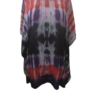
8. Tie-Dye: Pattern Through Resistance
Tie-dye is one of the oldest and most recognisable resist-dyeing techniques.
Its basic principle is simple: parts of the fabric are prevented from receiving dye.
The process
Fabric is manipulated before dyeing by tying, folding, twisting, binding or compressing sections.
The bound sections resist the dye.
Once the fabric is opened, a pattern is revealed.
Different manipulation techniques create different effects:
- Spiral tying → radiating circular patterns
- Folding → geometric bands
- Scrunching → organic cloud-like effects
- Binding → rings and irregular lines
- Pleating → repetitive patterns
Fashion relevance
Tie-dye has moved repeatedly between craft, counterculture, luxury fashion and mass-market clothing.
Its enduring appeal comes from its ability to combine colour, randomness and human intervention.
Unlike perfectly printed fabric, tie-dye suggests that something happened to the garment rather than simply being printed onto it.
9. Mud Wash: The Look of Earth and Utility
Mud wash is designed to create an earthy, dirty, mineral-like or heavily worn appearance.
The term can refer to different commercial finishing processes rather than one universally standardised recipe.
The process
Depending on the manufacturer and desired effect, garments may be treated with dark pigments, specialised dyes, mineral-looking formulations or controlled surface applications.
The intention is generally to make the garment appear as though it has accumulated layers of soil, dust and environmental exposure.
The aesthetic
Mud wash tends toward:
- Brown
- Taupe
- Olive
- Charcoal
- Dirty beige
- Muted black
Rather than clean colour, the surface feels contaminated, aged and atmospheric.
Fashion relevance
Mud wash works particularly well with the current fascination with:
- Utility clothing
- Workwear
- Military references
- Outdoor clothing
- Post-apocalyptic aesthetics
- Raw and distressed fashion
It can make a new garment appear as though it already has a history.
10. Pigment Dye: Colour That Ages Beautifully
Pigment dyeing is especially important in casualwear.
Unlike dyes that penetrate fibres more deeply, pigments are generally deposited onto the surface with the help of binders.
The process
A pigment is applied to the garment and fixed using a binder system. Subsequent washing and wearing gradually alter the surface.
This creates a particularly attractive characteristic:
the garment continues to change after purchase.
The result
Pigment-dyed garments often develop:
- Faded edges
- Soft tonal variation
- Vintage character
- Surface abrasion
- Slightly chalky colour
Why it is relevant
For brands interested in vintage aesthetics, pigment dye creates a garment that can become increasingly personal over time.
A new pigment-dyed black T-shirt may eventually develop softer grey highlights at the collar, seams and edges.
The garment essentially becomes a record of its own use.
11. Garment Dye: Colour After Construction
Garment dyeing differs from piece dyeing because the garment is constructed first and dyed afterward.
The process
Instead of dyeing the fabric before cutting and sewing, the finished garment is placed into a dye bath.
This has an important consequence: the dye interacts with multiple materials and construction details simultaneously.
Thread, fabric, labels, trims and different fibre compositions may react differently.
The result
This can produce subtle variations between:
- Body fabric
- Stitching
- Seams
- Pockets
- Ribbing
- Trims
Fashion significance
Garment dyeing is particularly valuable for creating relaxed, washed-down clothing.
It is strongly associated with:
- Casualwear
- Workwear
- Luxury basics
- T-shirts
- Sweatshirts
- Chinos
It also reinforces the idea that a garment is an object rather than simply a piece of coloured fabric.
12. Dip-Dye Gradient and Ombre Dyeing
Although related to dip dye, ombré dyeing deserves its own place because of its importance in contemporary fashion.
The objective is a gradual transition from one colour intensity to another.
The process
The garment or fabric is progressively exposed to different concentrations of dye.
The transition may be subtle or dramatic.
For example:
cream → blush → coral
or:
pale grey → charcoal → black
Why it works
Ombre creates a visual sense of vertical movement.
On long garments, the gradient can alter how the eye perceives the silhouette, making it particularly effective for dresses, coats and wide-leg trousers.
13. Spray Dyeing: Controlled Irregularity
Spray dyeing allows colour to be placed onto selected areas rather than immersing the entire garment.
The process
Dye, pigment or colour formulation is sprayed onto the garment through a controlled nozzle.
The operator can vary:
- Pressure
- Distance
- Colour density
- Direction
- Layering
The aesthetic
Spray techniques can create:
- Clouds
- Shadows
- Speckles
- Gradients
- Localised colour
- Overspray effects
This makes spray dyeing particularly interesting for fashion brands that want the garment to resemble an artwork.
14. Dip-and-Overdye: Building Colour in Layers
Overdyeing is the practice of dyeing a garment that already possesses another colour.
It is one of the most powerful techniques for creating complex colour relationships.
Imagine a garment originally dyed pale blue and subsequently dyed yellow.
The resulting visual impression may be greenish because the two colour systems interact.
The process
The garment undergoes one dyeing stage and is subsequently subjected to another colour treatment.
The final result depends on:
- Original colour
- New dye colour
- Fibre composition
- Dye chemistry
- Concentration
- Temperature
- Time
Why designers use it
Overdyeing creates colours that can feel deeper and more complex than a single flat dye.
It is particularly effective for fashion seeking a vintage, artisanal or archival appearance.
15. Discharge Dyeing: Removing Colour to Create a New Image
Discharge techniques work almost in reverse to conventional dyeing.
Instead of adding colour, a chemical process removes colour from a previously dyed fabric.
The process
A discharge agent is applied to selected areas of a dyed garment.
The agent destroys or reduces the existing colour.
Depending on the chemistry, the discharged area may become:
- White
- Cream
- Pale grey
- A lighter version of the original shade
Why it matters
Discharge can create very sharp graphics while maintaining the softness of the textile.
It is widely relevant to printed T-shirts and fashion graphics because the resulting design can become part of the fabric’s surface rather than sitting as a heavy layer on top.
16. Vintage Wash: Manufacturing the Appearance of Age
“Vintage wash” is best understood as an umbrella term, rather than one single technical process.
A vintage finish may combine several treatments.
A typical approach might involve
- Garment dyeing
- Enzyme washing
- Mechanical abrasion
- Softening
- Localised fading
- Drying or finishing
The objective is to reproduce the visual and tactile qualities of an older garment.
The philosophy
Vintage washing is essentially the industrial manufacture of history.
The garment has not spent ten years being worn, washed and exposed to sunlight. The finishing process attempts to compress those experiences into a controlled production cycle.
17. Acid + Stone + Enzyme: Composite Washes
Modern garment finishing increasingly relies on combinations rather than isolated techniques.
A designer may request a finish that combines:
stone abrasion + enzyme treatment + bleach + softener
The result can be significantly more sophisticated than any individual technique.
For example:
- Stone washing creates abrasion.
- Enzymes soften and clean the surface.
- Bleach reduces colour.
- Softener modifies the hand feel.
This layered approach allows a finishing specialist to manipulate colour, texture and softness independently.
18. Resin and Coated Finishes
Not every surface effect is created through dye.
Resin treatments and coatings can alter the appearance and hand of a garment dramatically.
They can create:
- Stiffness
- Shine
- Crinkling
- Paper-like texture
- Structured creases
- Coated surfaces
These treatments are particularly relevant to experimental denim and outerwear.
They can make fabric look almost architectural.
19. Laser Wash: Digital Precision Meets Denim
Laser finishing represents one of the more technologically advanced directions in garment washing.
Instead of mechanically abrading every faded area, a laser can selectively alter the surface of denim.
The process
A computer-controlled laser moves across the garment and creates predetermined areas of colour reduction or visual abrasion.
What it allows
Designers can create:
- Whiskers
- Fading
- Graphics
- Vintage effects
- Repeated patterns
- Precise abrasion
The major advantage is repeatability and precision.
It can also reduce some of the physical materials traditionally required for certain denim finishing processes.
20. Ozone Washing: Fading With Gas
Ozone finishing is another technology associated particularly with denim.
Ozone can be used to reduce indigo colour without relying entirely on conventional wet chemical bleaching.
The concept
Ozone is generated and introduced into a controlled finishing environment where it reacts with the colour on the garment.
The garment can then be rinsed and finished.
Why the technique matters
The industry has increasingly explored ozone and other low-liquor or dry-finishing technologies because conventional garment washing can require significant quantities of water and chemicals.


Leave a Reply